
How Much Does a Backyard Remodel Cost in the Sacramento Area? (2026 Guide)
Published 2026 cost guides price landscaping at about $4.50 to $17 per square foot. One puts a full backyard renovation at $15,000 to $50,000. At those rates, a 1,000 to 2,000 square foot backyard around Sacramento lands near $4,500 to $34,000. Concrete and walls push a yard toward the top of that band.
The range is wide because backyards are. One yard needs sod and a drip line. Another needs a patio, a retaining wall, turf and a pergola, built as one project.
What does a backyard remodel cost in 2026?
Three 2026 guides put a professionally built yard at $4.50 per square foot on the low end. HomeAdvisor puts most homeowners at $4.50 to $12, while LawnStarter tops out at $14.50 and Lawn Love at $17. Those averages blend cheap surfaces with expensive ones, so the line items tell you more.
| Line item | Published 2026 range | Priced by |
|---|---|---|
| Concrete patio, plain or broom finish | $4 to $13 | Square foot |
| Stamped concrete | $9 to $28 | Square foot |
| Artificial turf, installed | $5.45 to $20 | Square foot |
| Sod on bare new-build soil | $1 to $2.50 | Square foot |
| Retaining wall | $20 to $60 | Square foot of wall face |
| French drain | $10 to $35 | Linear foot |
| Sprinkler system | $1,650 to $3,600 | Whole system |
| Solid wood patio cover | $60 to $120 | Square foot |
| Pergola, about 100 square feet | $2,100 to $6,400 | Structure |
These are market ranges, not quotes. They are the pieces we plan together on a complete backyard remodel, in the order the yard needs them.
The concrete rows have fuller guides: concrete patio prices by finish and stamped concrete by design tier. Turf and sod have their own: turf prices by grade and base prep and sod prices by lawn size.
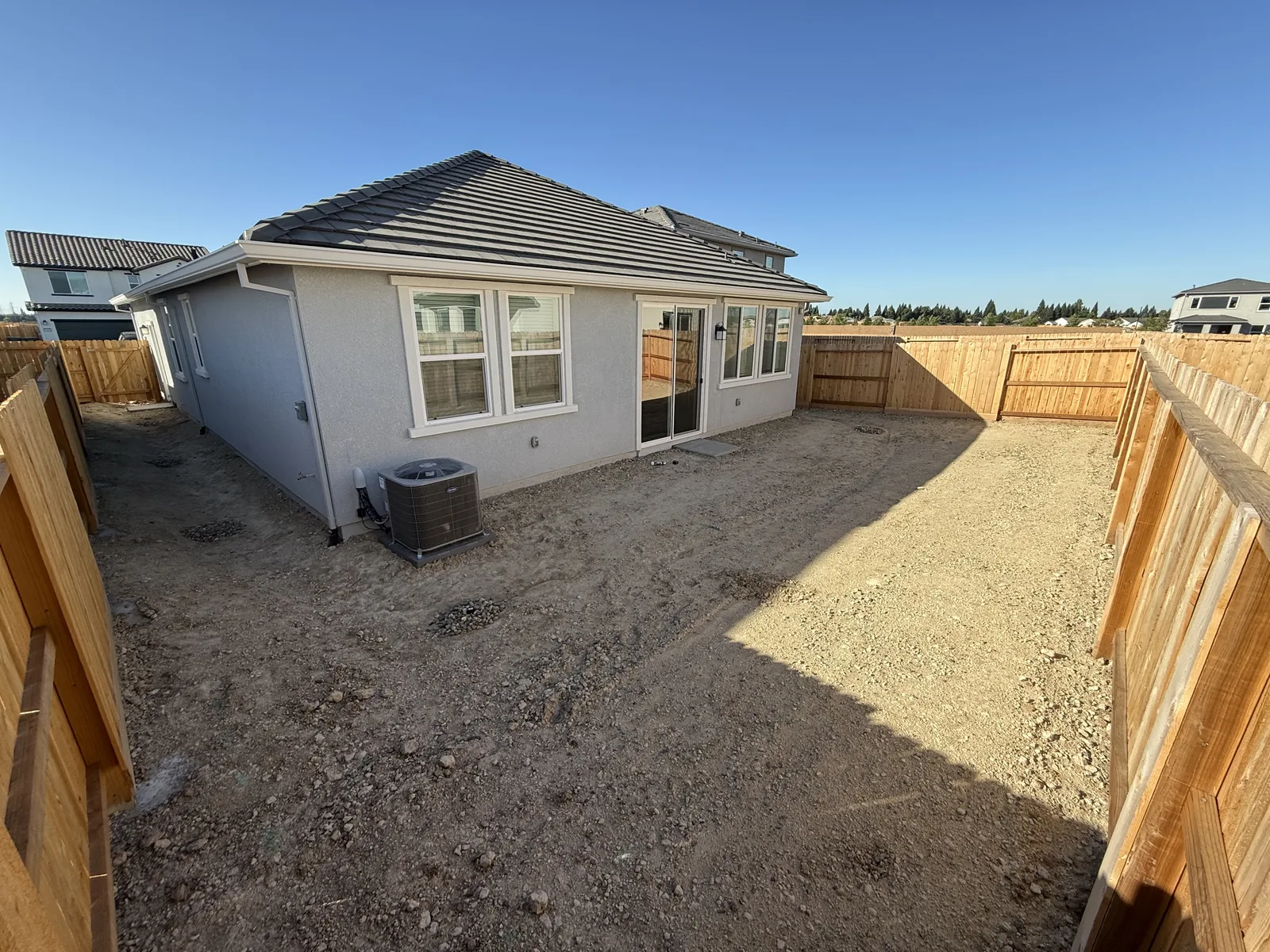
What does a new-construction backyard cost when it starts as builder dirt?
A builder dirt yard prices within the same ranges, with one saving and one catch. The saving is that nothing has to come out first. One 2026 guide says a full tear-out can push costs to $40 per square foot. The catch is that every system goes in at once.
Builder dirt is a common start in newer Roseville, Rocklin and Lincoln neighborhoods, and those cities keep growing. Census surveys for 2020 to 2024 put Roseville near 156,000 people, up about 15 percent from 2015 to 2019. Rocklin grew about 13 percent to near 73,000, and Lincoln about 12 percent to near 53,000.
Order sets the budget on a dirt lot, so we plan these yards from the ground up:
- Grade the yard to drain away from the house, with drain lines set in the same pass.
- Lay sleeves and conduit where concrete will go, then run irrigation lines while the ground is open.
- Pour the concrete and build the walls while trucks can still reach the yard.
- Finish with turf, sod, rock and planting, so nothing new gets driven over.
That order saves money twice. A sprinkler system runs $1,650 to $3,600 in one guide. Installed in the same job as the sod, it prices closer to the bottom. Sleeves laid before the pour also mean nobody cuts concrete later to run a line.
Lawn rebates pay nothing here, because they pay to take lawn out. Roseville’s Cash for Grass pays $1.50 per square foot of turf grass removed and replaced with water efficient landscape. Its cap is $2,000 per address.
The Placer County Water Agency pays $3.00 per square foot of converted lawn. Its terms say dirt or weed-filled areas are not eligible. A builder dirt yard has no lawn to remove, so neither program applies.
What moves the price in a Sacramento-area yard?
Soil, slope, access and water move the price most. Each one changes the work that happens before the surfaces go in.
Clay and hardpan. Many yards here sit on clay or hardpan, which holds winter water and digs slowly. One Sacramento estimating guide adds $3 to $5 per square foot when expansive clay pockets need over-excavation under concrete.
Slopes and walls. One 2026 sod guide says slopes and hills can add up to 10 percent to the job. Grading an uneven area can add $1 to $3 per square foot in the same guide. A slope steep enough to need a wall costs more again. Our guide to what retaining walls cost around Sacramento shows how height drives that number.
Side-yard access. A backyard reached only through a narrow side yard takes longer to build. If the truck cannot reach the pour, one local guide puts a boom pump at $750 to $1,100 per day.
Drainage. Water that sits on clay finds every low spot, and fixing it after the concrete is in costs more. French drains run $10 to $35 per linear foot in published guides. Our French drain cost breakdown covers when a yard needs one.
Watering rules. Roseville allows no outdoor landscape watering between 10 a.m. and 8 p.m. Drip irrigation is exempt from the city’s watering day restrictions. So the lawn and the planting beds get separate sprinkler and drip zones. Those lines get planned before any concrete goes in.
Where does the money go in a backyard build?
The big numbers sit in hardscape. Concrete runs $4 to $28 per square foot, and walls run $20 to $60 per square foot of face. Sod on bare soil runs $1 to $2.50 per square foot. One guide says front yards cost less because they rely on plants and fresh sod, not big-ticket hardscape.
Concrete and walls also go in first, for a practical reason. Concrete trucks and compaction equipment need open ground, and finished turf would not survive the traffic. One reviewed project shows the full scope: a concrete back patio and a raised stamped slab with a pergola. Turf with concrete steps and a side retaining wall were part of the same build.
Add-ons stack on the base build. A backyard putting green prices above a standard turf lawn, since it needs denser turf and a tighter base. A wood patio cover or pergola goes on footings planned with the slab.
A cover can also add a permit. Roseville’s building handout requires a permit, with plan check, for a patio cover attached to the main structure. It lists a patio cover of 120 square feet or less as work that needs no permit. The handout was last revised in 2018, so check current rules with the city first.
Can you phase a backyard remodel?
Yes, and the split that works is underground first, surfaces later. Phase one covers grading, drainage, sleeves, irrigation lines, concrete and walls. Phase two adds turf, sod, rock, planting and any cover.
The rule is that phase one has to finish ready for phase two. Sleeves stay capped under the slab, and irrigation lines stub out where the beds will go. Phase two then connects to them without cutting concrete or trenching through new work. Done in that order, phasing avoids paying twice for the same access.
It also means the whole yard gets planned on day one, even if half of it gets built next year. That plan is what puts drains, sleeves and footings where the second phase needs them.
How do you get a real number for your yard?
A measured, line-item quote from an on-site visit is the real number. Start by sketching the yard as rectangles. Measure each one, multiply length by width and add them up. Then ask for each line on its own: grading, drainage, irrigation zones, concrete, walls and each surface.
When two bids sit far apart, compare base prep and drainage first. Those are the lines a low bid tends to trim.
RMR Construction is a licensed California contractor, CSLB #1088628. Estimates are free, and the quote comes in writing after an on-site walk-through. See how we build a whole backyard from graded dirt to finished yard, or call (916) 533-4758.