
Sod vs Seed in the Sacramento Area: Cost, Timing and Water for a New Lawn (2026)
Seed is the cheapest way to start a lawn, and sod is the fastest. Fixr puts seeding at $0.10 to $0.22 per square foot and sod at $0.85 to $1.75, labor included. For sod vs seed around Sacramento, seed suits a small budget and an early fall start. Sod can go down most of the year.
We install sod, so we have a stake in this answer. Every figure below comes from a published source, and seed gets credit where it wins. A common starting point is a new-build backyard in Roseville, Rocklin or Lincoln, handed over as graded dirt.
Sod vs seed at a glance
Seed wins on price. Sod wins on speed and on the calendar. Costs come from Fixr, and the rest from the University of California (UC) Guide to Healthy Lawns.
| Factor | Seed | Sod |
|---|---|---|
| Cost per sq ft | $0.10 to $0.22, labor included | $0.85 to $1.75, sod and installation |
| 1,000 sq ft lawn | $100 to $220 | $850 to $1,750 |
| Best planting time | Early fall for cool-season grass, late spring for warm-season grass | Virtually any time of year, avoiding very hot or very cold weather |
| Ready for foot traffic | May take 10 to 15 weeks | Within 2 to 3 weeks of planting |
| Watering at the start | Soil kept moist through germination, usually 1 to 2 weeks | Frequent, light watering while roots grow, then less often |
| Weed pressure | Open to weed invasions, pests and seedling diseases | Fewer weed invasions than other methods |
| Slopes | Seed may wash away in rain; hydroseed beats hand-seeding | Can stop soil erosion |
The prices are market ranges, not a quote.
What does seed cost compared to sod?
Sod costs about 8 times as much as seed for the same lawn. Fixr prices a 1,000 square foot lawn from seed at $100 to $220, labor included. The same lawn in sod runs $850 to $1,750, sod and labor combined.
UC ranks the methods the same way. It calls seeding the cheapest method and sodding the most expensive method. Hydroseeding falls between the two, more expensive than seeding.
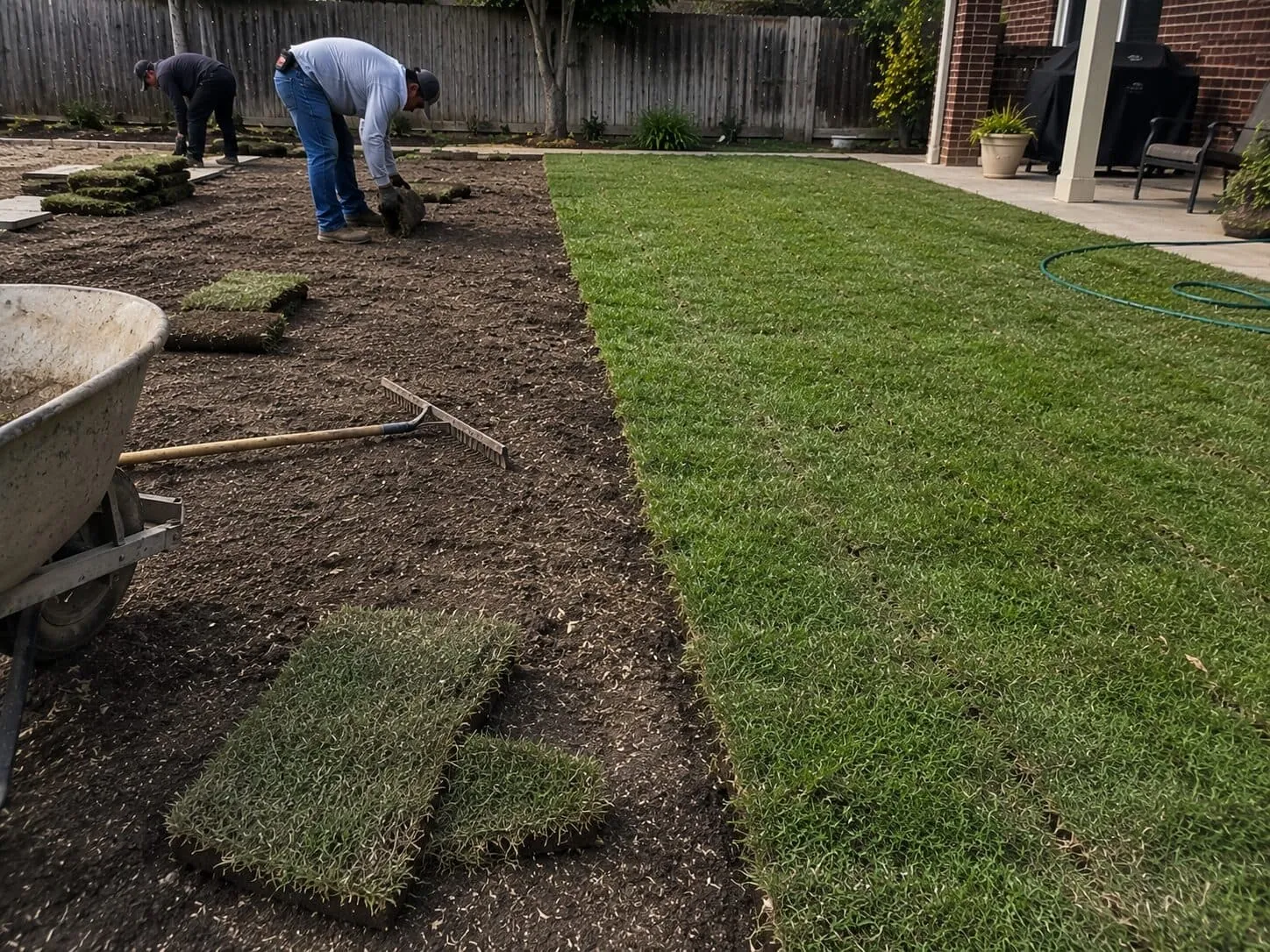
The extra cost buys a finished lawn on day one, which UC calls an instant lawn. For sod prices by yard size, see our Sacramento sod cost guide. For the steps before the rolls go down, see how we lay sod on a new-build lot.
A rebate will not shrink this gap for a new lawn of either kind. Roseville’s Cash for Grass program pays to take turf grass out. It pays $1.50 per square foot removed and replaced with water efficient landscape, with a cap of $2,000 per address. Placer County Water Agency terms for lawn replacement rule out dirt or weed-filled areas. A new-build dirt yard earns nothing for seed or for sod.
When can seed and sod go down around Sacramento?
Sod can go down in most months, and seed has set windows. UC’s planting table puts seed in early fall for cool-season grasses and late spring for warm-season grasses. For sod, it says virtually any time of year.
The grass decides the seed date. Tall fescue, a cool-season grass, is the most common lawn grass in California, according to UC. UC also rates its tolerance for heat stress and drought as excellent. That makes early fall the best time to plant grass seed for a fescue lawn in the Valley.
Summer is the hard stretch. Sacramento’s summers are long, hot and dry, with about 76 days a year at 90 F or above. UC has seed raked in only 1/16 to 1/8 inch deep, so the seedbed sits right at the surface. For a summer start, UC suggests mulch no more than 1/4 inch thick over the seed. It helps keep the soil moist.
Sod has its own limits. UC says to avoid very hot or very cold weather when possible. When the day is hot, UC’s advice is to water the soil just before laying sod. A yard finished in spring can take sod in the next mild week. A fescue lawn from seed waits for early fall.
How does Roseville’s watering schedule affect seed and sod?
The schedule presses harder on seed, which needs water often until it sprouts. UC says to keep the soil moist through germination, usually 1 to 2 weeks, with frequent, light irrigations. UC’s comparison table rates seeding as high maintenance for water needs and weed control.
Sod asks for less. Fresh sod still gets frequent, light watering while it roots, and UC’s table says sod requires less frequent irrigation. Hydroseeding sits in the middle, with water needs UC calls not quite as high as for seeding.
Set the fescue seed window against Roseville’s calendar. The city’s suggested schedule lists Monday and Friday as residential watering days in September and October. That is two days a week for a seedbed that wants frequent, light water. Its hours rule out daytime runs: no outdoor landscape watering between 10 a.m. and 8 p.m.
From May through August, the days are Monday, Wednesday and Friday. March and April match the fall months. From November through February, the schedule lists Monday.
The schedule names one exemption: drip irrigation is exempt from watering day restrictions. Before you plant either one, ask your water provider how it treats a new lawn. Placer County Water Agency and City of Sacramento customers should check with their own provider.
Whichever you choose, the sprinkler zones for the new lawn go in before the grass. Set the timer to run outside the 10 a.m. to 8 p.m. window. On our builds, the beds and trees around the lawn get separate drip zones.
Which one holds up better against weeds and slopes?
Sod has the edge on weeds. On slopes, sod and hydroseed both beat hand-spread seed.
UC lists seeding and hydroseeding as susceptible to weed invasions, vertebrate pests and seedling diseases. Seed may get washed away by rain. Not all seeds germinate at the same time or rate. A seeded lawn can take a while to fill in evenly.
Sod arrives grown in. UC says it gives the best quality turf of all methods, with fewer weed invasions and good uniformity.
Slopes are where seed has a strong answer. UC rates hydroseeding better than hand-seeding on slopes or other hard-to-reach areas. It also says large lawns or hard-to-reach areas may be better hydroseeded. Sod can stop soil erosion, and UC rates it good for slopes as well.
What does the ground need before seed or sod?
The same prep, either way. UC calls a well-prepared seedbed essential for establishing grass from seed. Its sod steps start the same way: prepare the soil, without leaving deep footprints or wheel tracks. Those dips restrict root development and give the installed sod an uneven look.
Soil around Sacramento can hide a problem. A Sacramento County Cooperative Extension guide says water cannot penetrate hardpan. The soil above it can easily become waterlogged. So grade and drainage come before any seed or sod.
On a new-build lot, the lawn is one of the last steps. We set the grade and drainage, run the underground lines, pour the concrete, then lay the lawn. That is the order behind a backyard built from graded dirt.
Which one fits your new lawn?
Seed fits when cost leads and the lawn can wait for early fall. Sod fits when you want a usable lawn soon, or the yard is ready in another season.
Seed wins on:
- The lowest cost of any method, about one eighth the cost of sod for the same lawn
- Large or hard-to-reach areas, where hydroseeding beats hand-seeding
Sod wins on:
- Planting in most months, outside heat waves and cold snaps
- Foot traffic within 2 to 3 weeks, where a seeded lawn may need 10 to 15
- Fewer weed invasions and the best quality turf of all methods
- Less frequent watering once it roots
- Erosion control on slopes
Still weighing grass at all? Compare artificial turf and a living lawn side by side. If sod fits your yard, see what goes into our sod lawn installs.
RMR Construction is a licensed contractor, CSLB #1088628. Estimates are free, and the written quote follows an on-site walk-through. Ask for a free estimate.