
How Much Does Sprinkler System Installation Cost in the Sacramento Area? (2026 Guide)
Published cost guides put sprinkler system installation cost at about $0.90 to $1.98 per square foot of yard. At those rates, a 2,000 square foot backyard runs about $1,800 to $3,960. A 5,000 square foot yard runs about $4,500 to $8,500 in one guide. Zone count, drip lines and the controller set where your yard lands.
These numbers cover lawn and landscape irrigation, not fire sprinklers. They assume a full new system, the kind that goes into a graded dirt backyard or a front-and-back rebuild.
How much does a sprinkler system cost in 2026?
Three national guides put an installed in-ground system between $0.50 and $2 per square foot of yard. LawnStarter says $0.90 to $1.70, with materials and installation included. Homewyse starts at $1.08 to $1.98 in its September 2026 figures, and Fixr’s average is $0.50 to $2.00. NerdWallet runs lower, at $0.20 to $1 per square foot and a $2,539 average.
By the whole job, Fixr puts most systems at $4,000 to $7,000, with a national average of $5,500. That average buys a professionally installed in-ground system with an average controller on half an acre. Its high end, about $13,500, covers one acre with a smart controller and landscaping drip. LawnStarter’s only California city, San Diego, prices at $0.93 to $1.77 per square foot.
Line by line, the published ranges look like this:
| Line item | Published range | Guide |
|---|---|---|
| In-ground system, per square foot of yard | $0.90 to $1.98 | LawnStarter, Homewyse |
| One sprinkler zone | $585 to $1,335 | LawnStarter |
| Each added zone | About $750 on average | LawnStarter |
| Drip irrigation system | $1,191 to $2,918 | LawnStarter |
| Sprinkler heads, materials only | $1.50 to $40 each | LawnStarter |
| Wi-Fi or phone controller | $125 to $400 | LawnStarter |
| Rain and soil sensors | $17 to $75 each | LawnStarter |
| Backflow preventer valve, before installation | $100 to $600 | LawnStarter |
| Trench digging | $4 to $12 per linear foot | NerdWallet |
These are market ranges, not a quote. Every one of these lines comes back when we lay out sprinkler and drip system installation for a whole yard.
What moves the price in a Sacramento-area yard?
Beyond zone count, four lines change the number in a yard around here. Labor is the biggest share of the bill. LawnStarter puts labor at about 60% of the total project cost.
Digging and soil. Trench digging runs $4 to $12 per linear foot in one guide. Fixr says lines sit between 6 and 12 inches deep, depending on the soil. NerdWallet says rocky or hardpan soil can add as much as $0.40 per linear foot.
UC Cooperative Extension in Sacramento County publishes a guide to planting on hardpan. It describes hardpan as a rock-hard layer close to the surface. The soil above it varies in depth from a few inches to two or three feet.
Water that cannot drain. UC also notes that water cannot penetrate hardpan, so the soil above it can easily become waterlogged. Overwatering shows up fast on that ground. Standing winter water is a drainage job, handled with grading or a French drain.
The controller. A Wi-Fi or phone-compatible controller runs $125 to $400, and rain and soil sensors add $17 to $75 each. Fixr prices a smart irrigation upgrade at $200 to $500. Smart controllers adjust watering to rain and weather data.
Backflow protection. One guide prices a backflow preventer valve at $100 to $600, before installation. Roseville lists irrigation or lawn sprinkler systems among its examples of potential cross-connections. Its program works by requiring backflow prevention devices in certain situations.
Roseville estimates the yearly inspection at about $105 per backflow device, billed through the utility bill. Ask your water provider what your connection needs before the plan is final.
How many zones does a yard need?
It depends on what the yard waters. LawnStarter says an average-sized lawn needs at least five irrigation zones. Fixr says small lots may be fine with one or two.
More zones cost more. LawnStarter prices five zones at $3,125 to $8,000, and Fixr prices five at $3,250 to $6,000. NerdWallet puts each zone at $600 to $2,000.
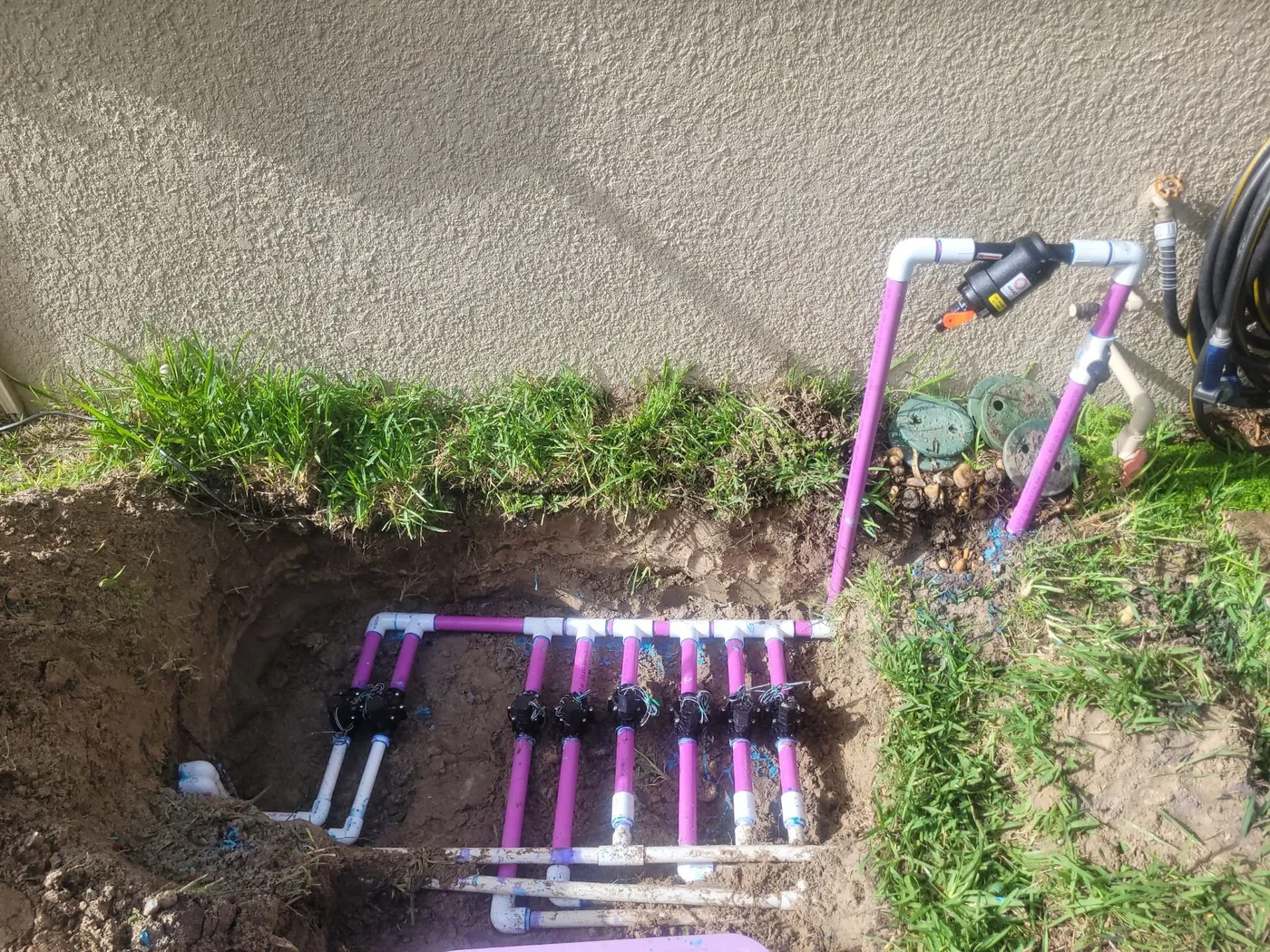
A zone is one section of the system where the same valve controls the heads. A zone can have five to 10 sprinkler heads, at $1.50 to $40 per head. Rotary heads cover more ground, so a lawn needs fewer of them than fixed spray heads.
Lawn and shrubs should not share a zone. Fixr explains that the shrubs would get too much water, or the grass would not get enough. Fixr also lists walkways, driveways, sun and shade, and slope among the things that set the zone count. A yard with a patio, a side yard and planting beds can need more zones than an open lawn.
Water pressure matters too. Most systems work within a range of 30 to 50 PSI. Higher pressure can mean fewer heads for the same lawn.
Spray heads or drip: which one goes where?
Spray and rotor heads water lawn, and drip lines water beds, shrubs and trees. Drip delivers water slowly right to plant roots. One guide puts a typical drip installation at $1,191 to $2,918, including materials and labor. Fixr notes that drip loses less water to evaporation.
Roseville’s watering rules push the same split. The city allows no outdoor landscape watering between 10 a.m. and 8 p.m. Residential watering days run Monday, Wednesday and Friday from May 1 through August 31. In March, April, September and October it is Monday and Friday, and from November through February it is Monday.
Drip irrigation is exempt from watering day restrictions. That exemption names watering days only, so set drip timers outside the 10 a.m. to 8 p.m. window too. Spray zones for a lawn follow the schedule, and beds on drip can run on the days the plants need. Outside Roseville, check your own water provider’s current schedule before the zones are set.
When should the sprinklers go in on a new-build yard?
Right after grading and drainage, before any concrete, turf or sod. Many of the yards we build start as graded dirt behind a new home, with no landscape or concrete. On those yards, the order of work decides what the irrigation costs.
- Grade the yard and set the drainage.
- Run irrigation lines, valves and sleeves while the ground is open, with conduit where it is needed.
- Pour the concrete and build the walls.
- Finish with turf, sod, rock and planting.
Doing it out of order costs money later. One guide prices adding a zone later at $500 to $650 per zone. Rerouting a system runs $600 to $800 per zone. Sleeves laid before the pour mean nobody cuts new concrete to run a line.
Sod and sprinklers pair well when they go in together. Fixr says sod and an in-ground system installed at the same time average $4,275 to $7,125. Zones and heads go in first, then sod installation over new sprinkler zones. Our guide to what new sod costs per square foot prices the lawn half of that job.
A turf yard still needs water in its beds and trees, so drip lines go in before the turf. Turf pricing sits in installed artificial turf prices around Sacramento. The whole yard, with concrete and walls, is in the full backyard remodel cost guide. One reviewed project covered concrete, decorative rock, a drip system, sprinklers, grass, trees and plants.
Can a rebate help pay for a new sprinkler system?
Not for a first install, going by the City of Sacramento’s own program text. Its Irrigation Upgrades rebate pays up to $800 to upgrade irrigation systems. The examples it lists are changes to an existing system: high-efficiency nozzles, spray-to-drip conversions and smart irrigation controllers.
For single-family homes, that $800 splits into two parts. Up to $400 covers materials used to upgrade current irrigation systems to drip or a high-efficiency system. Up to $400 more covers upgrading to an EPA WaterSense-certified smart irrigation controller.
The rebate is for City of Sacramento water customers, and a pre-inspection comes before any work starts. Projects already underway at that point are not eligible.
A dirt backyard has no current system to upgrade, so leave this rebate out of a new-build budget. It fits an older yard converting spray zones to drip. Roseville’s rebate page lists its irrigation upgrade rebates under commercial programs, so check your own water provider first.
How do you get a real number for your yard?
Measure the yard, mark what needs water, then ask for a line-item quote. Break the yard into rectangles, multiply length by width and add them up. Mark the lawn, the beds, the trees and any side yard strips, since each may need its own zone.
Then ask every bid to list the same lines. Zone count, head type, drip zones, the controller, backflow, trenching and sleeves should each show up. When two bids sit far apart, compare zone count and head count first. Once the system runs, set the controller to your city’s schedule and check each zone for overspray.
RMR Construction is a licensed California contractor, CSLB #1088628. Estimates are free, and the quote comes in writing after an on-site walk-through. See how we plan irrigation zones around the rest of the yard.